

The yellowing of foliage significantly hinders the process of photosynthesis in the plant, which obstructs its normal growth and development. This is due to the degradation of the green pigment chlorophyll, which is meant to absorb sunlight and generate energy for the plant, and the dominance of yellow or orange chloroplasts. What are the potential causes of this?
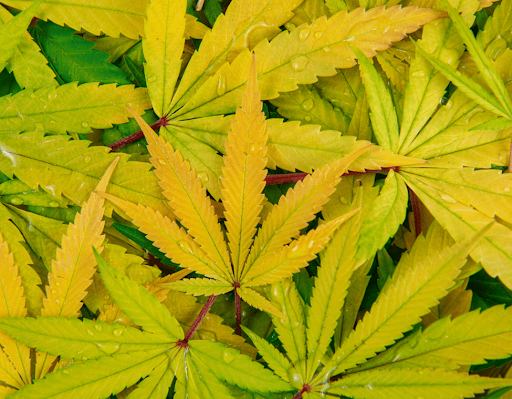
This issue is the most frequent cause of yellowing cannabis leaves. This can occur due to excessive watering of the plant or due to insufficient.
Excessive Watering. If the plant receives an abundance of water, the latter will not allow oxygen to the roots. Excessive watering will make your marijuana leaves appear full and swollen. The cause may also be a poor drainage system, if for example, there are no drainage holes in the container, which expel excess water, or they are inadequate. It is also feasible if a small cannabis plant is put in a large pot, which leads it to receive too much moisture. To prevent this from occurring, or to rectify this issue, you need to adjust your watering methods, such as watering less or using less water. The main thing is not to permit cannabis to turn completely yellow, so you must care for your plants.
Underwatering. The indication of underwatering is that the leaves appear thin and limp. Too many cannabis plants may grow in the pot, causing them not to receive adequate water each. It is also possible if you left and missed watering day. In such situations, you need to fine-tune the amount of water that cannabis gets each time so that it is sufficient for the plant’s normal life.
In case of nitrogen deficiency, the entire plant looks pale, and some leaves may turn yellow (with excessive amounts of nitrogen the foliage becomes darker). Nitrogen is necessary for the plant’s growth, it is particularly important for new leaves. If there is a shortage of nitrogen, the upper leaves might start to absorb nitrogen from the lower leaves. As a result, the leaves lose the nitrogen they require and begin to turn yellow and wither. To avert this, the plant should be provided with adequate nutrients, including nitrogen. If you have rectified your nitrogen intake after this issue, but the symptoms have not vanished, it is most likely that the yellowing is caused by some other factor.
This situation is possible with the incorrect level of acidity of the water you provide cannabis. The normal level is generally around 7.0. If the pH level is low, the plant will be unable to absorb enough nutrients from the soil, as they will be seized and neutralized by water. Thus, it is crucial to maintain an adequate level of water acidity so that the leaves remain healthy.
It is well recognized that illumination, as well as watering, is one of the essential factors in the growth and progress of any plant. Lighting troubles can lead to cannabis leaves changing color to yellow.
Burn Leaves. Overexposure of the plant to illumination or being too close to a light source can result in this. This cause is relatively easy to identify because it is usually only the upper leaves, which are nearest to the lamp that turn yellow. To resolve this issue is simple: just relocate the lamp further from the plant, and also adjust the lighting schedule if the plant is exposed to light for too long.
Lack of Lighting. If your cannabis plant does not receive adequate light, the lower leaves turn yellow and become limp because they get less illumination. The remedy is similar: to adjust the lighting regimen for the plant.
Temperature issues can arise at two extremes: overheating the plant or hypothermia. This is likely in case of divergence from the optimal temperature for growing – between 18°C and 28°C (70-80°F).
Heat Stress. Temperatures exceeding 28°C (80°F) slow the photosynthesis process, which can lead to the leaves turning yellow. Hence, it is essential to take several preventive actions: ensure and regulate adequate air circulation in the room, create temporary shade (if growing outside), and prevent overheating from the lamp.
Cold Shock. At excessively low temperatures, the plant wilts and turns yellow (it can even turn purple). Therefore, cultivators need to ensure that cannabis plants do not become too cold, especially if you cultivate them in the basement or outdoors.
General weakness, yellowing, and most importantly – the existence of spots and traces of insect bites – the primary indicators that the plant suffers from pests. To avoid this, you need to halt the negative impacts of the environment: restrict access to cannabis for pets, do not overwater the plant, always wash your hands and cover your hair. Most commonly, the plant is affected by fungal gnats, which feed on the roots of the plant if it is situated in a damp environment. That is why you should monitor the correct watering of the plant and avoid overwatering cannabis. To eliminate these and other pests, you should apply insecticides to the plant. However, since it is quite challenging to remove insects, it is preferable to prevent their appearance on the plant through these preventive measures.
The simplest method is to ascertain the cause of which foliage has turned yellow. If the lower – the issue is most likely a deficiency of nutrients or insufficient lighting. If the upper – this is most likely a burn.
However, it is much easier to avert the yellowing of the plant through proper watering, lighting, and nutrients.
There are instances when the yellowing of the foliage is natural and does not necessitate intervention. For example, the yellowing of leaves is typical of plants at the final stage of blooming. This is also possible with an incorrect lighting regimen, but such foliage can simply be removed and the lighting adjusted so that other leaves do not change color to yellow.
We know that a plant that suddenly loses its characteristic green hue can be disheartening to observe, but try not to fret too much. If you adhere to our suggestions closely, you can reverse the situation.
We understand that the yellow foliage may lead you to believe something went terribly wrong with your plant. Still, the origin of the problem can actually be a completely harmless natural aging process after flowering (senescence). However, if you’re unfortunate, you may have to deal with chlorosis, the loss of chlorophyll, a crucial fuel for photosynthesis. Interveinal chlorosis is particularly prevalent in new growth.
Do you irrigate your cannabis correctly? Once the soil dries, the plant needs a sip again. Both under- and overwatering can lead to the yellowing of the leaves and even trigger root rot. Another frequent cause can be nutrient deficiency or nitrogen burn (under- or over-fertilization). Alternatively, the yellowing can also occur due to incorrect pH, lighting, and temperature issues (temperatures below 50°F/10°C can be hazardous). Finally, there’s always a possibility that there can be a fungal infection or pests causing your greenie some trouble.
If your leaves are yellow due to watering issues, find a way to establish a proper irrigation schedule immediately. You can lift a pot and remember how it feels when it’s full of water. This way, you can always determine if your plant is thirsty. If the issue is nutrient-related, either refrain from feeding your green companion and run water through the soil to cleanse it or gradually begin feeding it with organic seaweed fertilizer. For improper pH, you should think about repotting your plant to different soil or using a balanced fertilizer or a pH meter. Adjust the temperature to a comfortable 68-77°F (20-25°C), and move your plants away from heaters and air conditioning units. Relocate the plant from intense light or enhance it, depending on the problem. In case you locate any pests, neem oil should be applied.
Unless your plant is quite young, it’s perfectly fine to prune your plant. By doing so, you can enhance its appearance and help it concentrate the energy on healthy growth.
With our Weed Delivery services, experience convenience and quality from the comfort of your home.
Completed! If you followed all four steps, you can now wave the yellowing goodbye and relax.
