

Cannabis has probably existed with humans as long as we’ve been cultivating crops, around 10,000 years.
The vegetation has consistently been a significant aspect of our existence and culture due to its multiple applications: its seeds can be consumed, its fibers transformed into resources, and its flowers applied for healing, spiritual practices, and leisure. Because of its practicality, humans disseminated cannabis seeds throughout the world.
So how did cannabis become unlawful in the United States and across much of the globe? And if it’s been beneficial to humans for millennia, why are more than 500,000 individuals in the US penalized for growing and possessing the vegetation every year?
Cannabis came to the Americas a few hundred years back (relatively late compared to the rest of the planet), and in that period, it transitioned from cash harvest to physician-recommended remedy to demon herb.
Discover how cannabis came to America, how it was banned, and how the nation is starting to accept it once more.
From its roots in Central Asia, cannabis ultimately found its way to present-day India, East Africa, and the Middle East through human movement. Arabic merchants are believed to have propagated the plant throughout North Africa and into Spain, which was part of various Arab or Berber nations from the 8th-15th centuries. In time, Christian European kingdoms conquered Spain, and the Spanish Catholic powers first invaded the Americas starting in 1492. Get your greens faster than ever with our reliable weed delivery order now!
Hemp is thought to have been transported to current-day Mexico by Pedro Cuadrado, a conquistador in Cortes’ army. Cuadrado and an associate initiated a prosperous enterprise cultivating hemp. However, in 1550, a Spanish official limited production because the locals were getting high with the plant instead of using it for cordage and fibers.
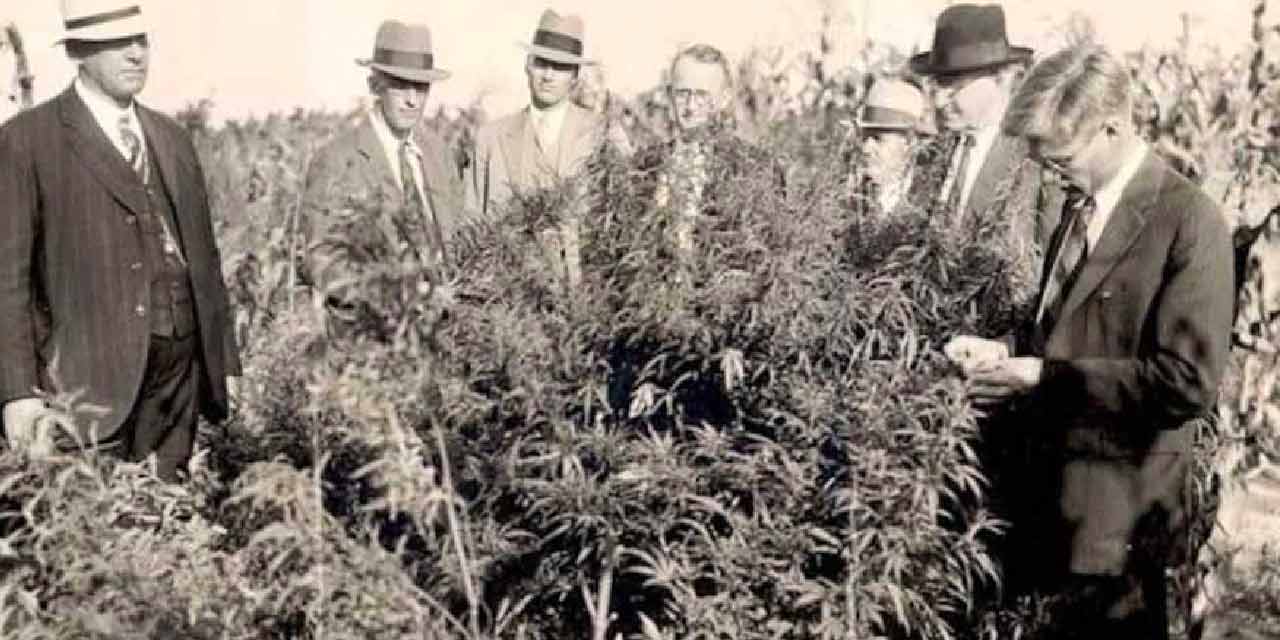
Hemp was also a favored source of fabrics and other resources in what would later become the United States. In 1611, King James I of England issued a sovereign order that colonists of the settlement of Jamestown, Virginia plant hemp. The valuable harvest could be utilized to craft rope, sails, clothing, fabrics, and other materials, and was occasionally more precious than currency.
In 1839, Irish physician William O’Shaughnessy presented cannabis as a remedy to the attention of Western medical professionals when he published On the preparations of the Indian hemp, or gunjah after working in India and experimenting with the plant there.
Cannabis tinctures and other products then became favored in Europe and the US. Numerous remedies containing cannabis claimed to heal various ailments, and the plant became so well-liked that more than 100 investigations were conducted on it in the last half of the 19th century.
After the Mexican Revolution (1910-1920), many Mexicans relocated to the US. Cannabis was more commonplace in Mexican culture. White politicians opposing immigration vilified Mexican Americans and cannabis, referring to the plant as “locoweed” and by its Spanish moniker “marihuana,” to negatively link it with Mexican immigrants and Mexican Americans.
In 1913, California became the initial state to ban the plant, amending its Poison Act to encompass cannabis. The state was a pioneer in anti-drug legislation. In 1875, San Francisco enacted an ordinance against opium dens. And by 1907, the state had prohibited the sale of opium, morphine, and cocaine without a physician’s authorization.
Utah, Texas, and New Mexico quickly followed suit in banning the plant, and by the early1930s,29 states had prohibited cannabis.
In 1930, the Federal Bureau of Narcotics was established and Harry J. Anslinger was appointed as its inaugural commissioner. He served the government during alcohol prohibition and was determined to apply his lessons learned from that period towards cannabis. Anslinger would lead the crusade to demonize and forbid the plant in the US over the next 30 years.
Years of sensationalist journalism and fear-mongering in the publications owned by tycoon William Randolph Hearst helped create a sense of dread around cannabis in the 1930s in America. The plant was portrayed as a perilous drug that caused Black Americans, Mexican immigrants, and members of the lower classes to commit offenses.
Fear of the plant reached the mainstream with the propaganda movie Reefer Madness, released in 1936. The film was intended to alert parents of the supposed dangers of cannabis use, depicting various dreadful incidents that occur to a group of teenagers all because they smoke some herb. Today, the film is a cult classic and an example of the ridiculous exaggerations of the impacts of cannabis many individuals believed decades ago.
Congress noted how states were prohibiting cannabis and reacted with the Marihuana Tax Act in 1937. At that time, the US federal government lacked the authority to outlaw cannabis, so it imposed a tax so severe that no one could afford it. Drafted by Anslinger, the act enforced a substantial tax against anyone utilizing the plant. Noncompliance meant a penalty of up to $2,000 and up to five years in prison. The first marijuana arrest under the new federal statute was a minor weed dealer in Denver, Colorado.
More than a decade later, in 1951, Louisiana congressman Hale Boggs persuaded Congress to enact the Boggs Act, which established mandatory sentences for drug offenses for the first time in the US. Originally it was only intended for hard drugs, but Anslinger testified and pushed to add cannabis to the list.
In 1965, Timothy Leary (who would later become an advocate for psychedelics) was apprehended for possession of cannabis while crossing the border from Mexico into Texas. Leary contended that the Marihuana Tax Act compelled him to self-incriminate—registering for the act indicated intent to possess marijuana, which would violate the fifth amendment. The US Supreme Court concurred with him in 1969 and nullified the Marihuana Tax Act.
However, with the repeal of the Tax Act, President Richard Nixon passed the Controlled Substances Act in1970, establishing a framework for the federal oversight and criminalization of drugs. The Controlled Substances Act created five classifications of drugs and categorized cannabis under Schedule I—drugs deemed dangerous with no medical utility and a high potential for misuse, such as heroin and cocaine.
Nixon appointed former Pennsylvania Republican governor Raymond Shafer as the head of the National Commission on Marihuana and Drug Abuse—later referred to as “The Shafer Commission”—to review all research and literature on cannabis to accurately categorize it in the Controlled Substances Act.
Shafer’s 1972 report debunked harmful myths about marijuana, found that the plant did not endanger society, and recommended decriminalizing the plant. Nixon disregarded the report, and the plant remained on Schedule I, where it continues today.
Despite the establishment of the Controlled Substances Act, some individual states still started lifting penalties and decriminalizing cannabis independently. By 1977, a fine—not imprisonment—was the only feasible penalty in Alaska, California, Colorado, Maine, Minnesota, Ohio, and Oregon for possession of fewer than 100 grams (3.5 oz). Other states soon followed suit.
“The Conflict on Drugs” was coined by the media after a 1971 press conference in which President Nixon proclaimed substance abuse America’s “public enemy number one.”
Just prior to the Shafer report’s release, in 1971, President Nixon held a press conference in which he labeled substance abuse as America’s “public enemy number one.” He escalated penalties and incarceration for drug offenders and increased law enforcement presence in the nation, particularly with the establishment of the DEA (Drug Enforcement Administration) in 1973. The media started designating these policies as the “War on Drugs.”
Numerous years later, John Ehrlichman, Nixon’s domestic policy advisor, remarked on the Nixon administration’s intentions with the War on Drugs:
“We understood we couldn’t render it illegal to be either against the [Vietnam] War or Black [Americans], but by getting the public to associate the hippies with marijuana, and Blacks with heroin, and then criminalizing both heavily, we could disrupt those communities. We could apprehend their leaders, raid their residences, disrupt their gatherings, and vilify them night after night on the evening news. Did we know we were lying about the drugs? Certainly, we did.”
President Ronald Reagan carried the torch, passing the Comprehensive Crime Control Act of 1984, a revision of the criminal code that amplified federal penalties for cannabis possession, cultivation, and distribution. It also dismantled parole for federal prisoners and established civil asset forfeiture.
Under Reagan, the Anti-Drug Abuse Act of 1986 increased federal mandatory minimum sentences for drugs, including cannabis possession. Systemic racism emerged yet again with notable sentencing disparities between crack, which was more associated with people of color, and cocaine, which was more associated with white individuals. Possession of five grams of crack carried the same penalty as 500 grams of cocaine: a minimum mandatory sentence of five years in federal prison.
The number of individuals incarcerated for nonviolent drug offenses in the US skyrocketed, from 50,000 in1980 to over 400,000 in 1997.
The racial disparities persist to this day: Black and white Americans both consume cannabis at the same rate, yet Black Americans are nearly four times as likely to be arrested for marijuana possession. In some states, it’s even greater.
In 2010, more than 50% of drug arrests were for marijuana possession, and it is estimated that states waste over $3.5 billion annually enforcing marijuana laws.
Hope began to arise for the plant in the final decade of the 20th century, when marijuana legalization first took form under medical defenses to possession and cultivation.
In 1996, California voters led the way with Proposition 215. Stricken by the AIDS crisis, San Francisco activists “Brownie Mary” Rathbun and San Francisco Cannabis Buyer’s Club owner Dennis Peron defied pot laws to distribute cannabis to the ill and dying. They demonstrated that cannabis could be an affordable, safe substance used to combat nausea, vomiting, wasting, spasticity, and many other AIDS- and cancer-related conditions.
In 1996, California became the initial state to vote in favor of medical marijuana.
In 1998, Alaska, Oregon, and Washington became the second, third, and fourth states to legalize medical marijuana, and Maine, Hawaii, Colorado, and Nevada followed soon thereafter. Currently, over 40 US states and territories have some form of medical marijuana legislation.
In 2012, Colorado and Washington became the initial US states to legalize cannabis for recreational use by adults aged 21 and older. Medical marijuana laws and regulations provided a framework for recreational marijuana laws, and Colorado’s expanded its already comprehensive medical regulations to encompass adult-use rules. In contrast, Washington’s medical marijuana system lacked robust regulation, and adult use prompted improved regulation of both programs within the state.
Oregon and Alaska followed with adult-use legalization in 2014. In 2016, California, Maine, Massachusetts, and Nevada legalized, then Michigan and Vermont in 2018, and Illinois in 2019. As of 2020, 68% of Americans believe cannabis should be made lawful.
However, despite 18 US states and two US territories having legal, adult-use cannabis laws and 41 states and territories having legal medical marijuana statutes, cannabis remains illegal at the federal level in the US.
Attitudes are evolving in the US and overseas. Still, it is crucial to construct a framework inclusive of the BIPOC community, and that rectifies the damages of prohibition and the Conflict on Drugs, which have impacted that community significantly. Much effort will still need to be exerted even after the plant is federally legalized.