

The roll is one of the most iconic methods to enjoy cannabis, and it’s a fantastic way to savor the taste of buds. Every cannabis enthusiast should be aware of how to create a roll.
There are numerous views on the various methods of crafting one, but regardless of what you choose, ensure your creation ignites smoothly and uniformly. Discover the joy of hassle-free shopping with our top-notch weed delivery service!
When beginning, we suggest using a 1/2 gram of herb and 1¼ size rolling sheets. This is a suitable quantity of herb for a few individuals, and starting small will make crafting the roll easier.
For context, most pre-rolled items sold in shops are a complete gram, although some come in2-packs of half-grams.
When you become proficient at crafting, you can transition to king-sized sheets and full-gram rolls, expanding your smoking circle.
There are hundreds of varieties of rolling sheets that come in different sizes, materials, and even tastes.
Size
1¼ sheets are the standard for crafting rolls because they’re straightforward to use and can accommodate a crutch or filter.
Single wides are slightly smaller than1¼’s at1 inch wide and are often used as standard cigarette rolling sheets.
1½ sheets are slightly wider than1¼’s, allowing for plumper rolls.
King size sheets are also well-liked, which are typically broader and longer than all the above. They’re perfect if you’re crafting for a large smoking circle.
You can also purchase rolls or sheets, which can be any of the above lengths and up to16 feet long—just tear off a portion for however long you want a roll to be.
Material
Rolling sheets have traditionally been crafted from tree pulp, but there are many different materials used to make them these days, including:
White sheets are often bleached, and some sheets have additives like charcoal to make them burn faster, but not always. Brown sheets are typically natural and unbleached. Be sure to check the packaging to see what rolling sheets are made of and if they have additives.
Innovative rolling materials include: gold leaf, rose petals, goji berries, cellulose, and more.
Flavored sheets
Rolling sheets can also come in various flavors. These have been treated or infused with flavors so they are not organic.
Cones
If you’re new to crafting rolls, consider purchasing a cone. These are rolling sheets that are pre-shaped into conical rolls, with a crutch at the end.
Simply grind up some herb, pour it in the cone, and pack it down with a tamping rod that’s usually included, or a pen or chopstick.
Here’s our simple seven-stage guide on the easiest way to craft a classic cone roll, even for newcomers.
Start by gathering your rolling materials:
Using a grinder, grind your cannabis into shake. Grinding herb makes the filling of the roll more uniform, simplifies the rolling process, and ensures that the roll burns uniformly on all sides. A grinder also prevents your hands from becoming sticky and adhering to the rolling sheet.
If your cannabis is properly dried, it should break apart easily. If you lack a grinder, you can break apart the herb using scissors or your hands.
Craft a crutch, also called a tip or filter. Start with a few ‘accordion’ folds, then roll the crutch to the desired thickness of your roll.
You can make a crutch out of just about anything, but we recommend filter tips, which are thin yet firm pieces of paper. Business cards, rolling sheet packs, or other thin pieces of cardboard make solid alternatives as well.
A crutch isn’t essential, but it adds support to the roll and allows you to enjoy every bit of cannabis without burning your fingertips. It also helps keep shake from spilling out of the end or into your mouth as you smoke.
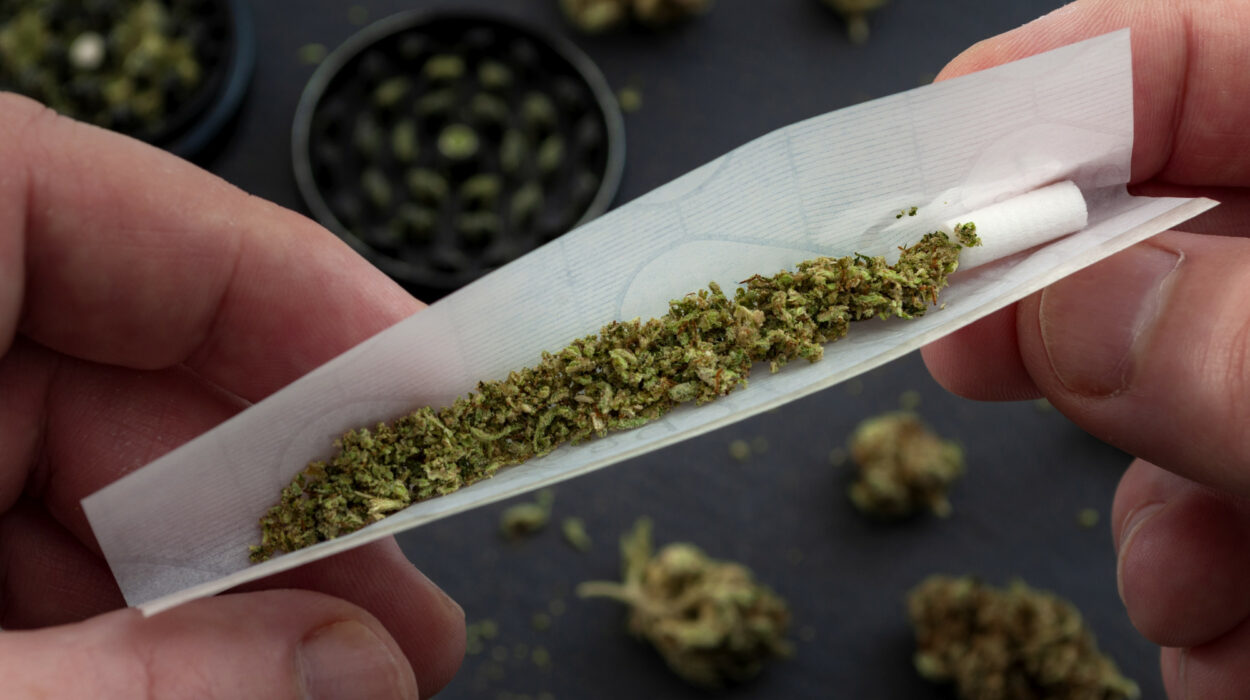
Place the crutch at one end of the rolling sheet and fill the sheet with shake. Once the paper has the appropriate amount—a half-gram to a full gram typically suffices—you can begin to form and shape the roll with your fingers.
A quick note on sheets: There are many different types and flavors of rolling sheets available. Many prefer hemp sheets because they tend to be thin yet durable and burn evenly without altering the flavor of your herb, but there are various sheets for every smoker.
Once you’ve loaded and shaped your roll, it’s time to roll the sheet. Pinch the sheet between your fingertips and roll it back and forth to pack the cannabis into its final cone shape.
This step can affect the quality of your roll significantly. Tuck the unglued side of the paper into the roll, roll it up, and lick an edge of the glued side to secure one end of the sheet, using just a small amount of moisture.
Pro tip: Start with the crutch side because it can help guide the paper as it rolls around itself.
Once the paper is secured on one end, you can work your way down the rest of the seam by tucking and sealing the roll.
Finally, pack the open end of the roll to help ensure an even burn. A pen is fantastic, but you can use just about anything slender.
Some good options if you’re on the go: the tip of your shoelace, the drawstring on your hoodie, or a small stick. If you’re not planning on lighting your roll right away, twist the tip to close it up.
Tips for crafting the perfect roll
Learning to craft a roll takes patience and practice. You might not create the ideal cone your first attempt, but keep trying, and you’ll be a master in no time. Here are some beginner tips to craft the perfect roll.
There are countless techniques to craft a roll. You can craft them large or small. Get inventive! Some individuals have even turned roll crafting into an art form, creating unique blends of functional origami.
Another trick is to use a dollar bill to help form a roll. Simply bend a dollar bill in half and place your ground herb in it. Roll it back and forth, slip a rolling sheet behind it, roll it up, and add a lick. Simple.
Other roll variations you can try crafting include a cross roll (two rolls crossed in the center, providing you with three ends to ignite), a pinner (a slender roll), or an L roll or tulip, which have extra amounts of herb in the tip.
Rolling sheets are inexpensive and easy to find. You can pick them up at any gas station or convenience store for less than $3 a pack. They might not be top-quality, but if you’re in a pinch, sheets from the corner store will work.
If you’re out of sheets, we suggest enjoying herb a different way, such as through a pipe or bong. Here’s how to create an if you don’t have a glass piece.
We do not recommend using other paper as a substitute for rolling sheets. Some individuals may use toilet paper, gum wrappers, or bible pages as alternatives, but these materials are not intended for inhalation and may include chemicals or substances harmful to your lungs and body.