

The therapeutic application of cannabis (“marijuana”) has predominantly been a consumer-driven occurrence due to the unlawful status of the herb Cannabis sativa and its components impeding any significant pharmaceutical advancement. Nevertheless, enthusiasm for the medicinal potential of substances extracted from cannabis (cannabinoids) has also been backed by recent research findings regarding the pervasive endogenous cannabinoid system (ECS) and its constituent receptors, ligands, and functional role in a broad variety of physiological activities. The impacts of cannabis on athletic capability have recently been assessed. This paper will examine this material, provide a wide context for the conversation, and emphasize some innovative considerations of cannabis usage by athletes. Your favorite cannabis products are just a click away with our fast Weed Delivery service!
It is commonly believed that cannabis in raw extract or tincture form has been utilized for its pain-relieving qualities throughout human existence. Because the social and leisure use of cannabis began to expand more broadly in the1960s, the chance that cannabinoids had possible therapeutic properties started to resurface. In1964, a group of Israeli researchers published the structure of the principal psychoactive component delta-9-tetrahydrocannabinol (THC), followed by the structure of another significant (but non-psychotropic) cannabinoid known as cannabidiol (CBD). However, the1961 Single Convention on Narcotic Drugs had outlawed cannabis and its components, categorizing them in the highly restricted schedule IV. Regardless of some minor attempts to investigate the therapeutic implications of THC for asthma, anxiety, and sleep, the potential medicinal effects of cannabinoids largely faded from scientific perspective.
In the late1980s and into the1990s, the medical utilization of cannabis became a political matter as patients with HIV/AIDS demanded access to the substance which they asserted helped with nausea, appetite loss, and discomfort (Grinspoon,1995 #5116); synthetic THC was authorized for chemotherapy-induced nausea and vomiting (CINV) and appetite loss associated with HIV/AIDS by the Food and Drug Administration (FDA) in1992 (dronabinol; Marinol), with another synthetic THC variant (nabilone; Cesamet) following in1995 with approval for CINV. Meanwhile, in the United Kingdom, patients with multiple sclerosis were also politically engaged and sought access to cannabis; this resulted in the development and launch of a plant-derived oromucosal solution (nabiximols; Sativex) in2005 in Canada for managing neuropathic pain and spasticity linked to multiple sclerosis and more recently for severe pain associated with cancer. Additionally, a formulation of cannabidiol (Epidiolex) has recently demonstrated effectiveness in reducing uncontrollable seizures in children.
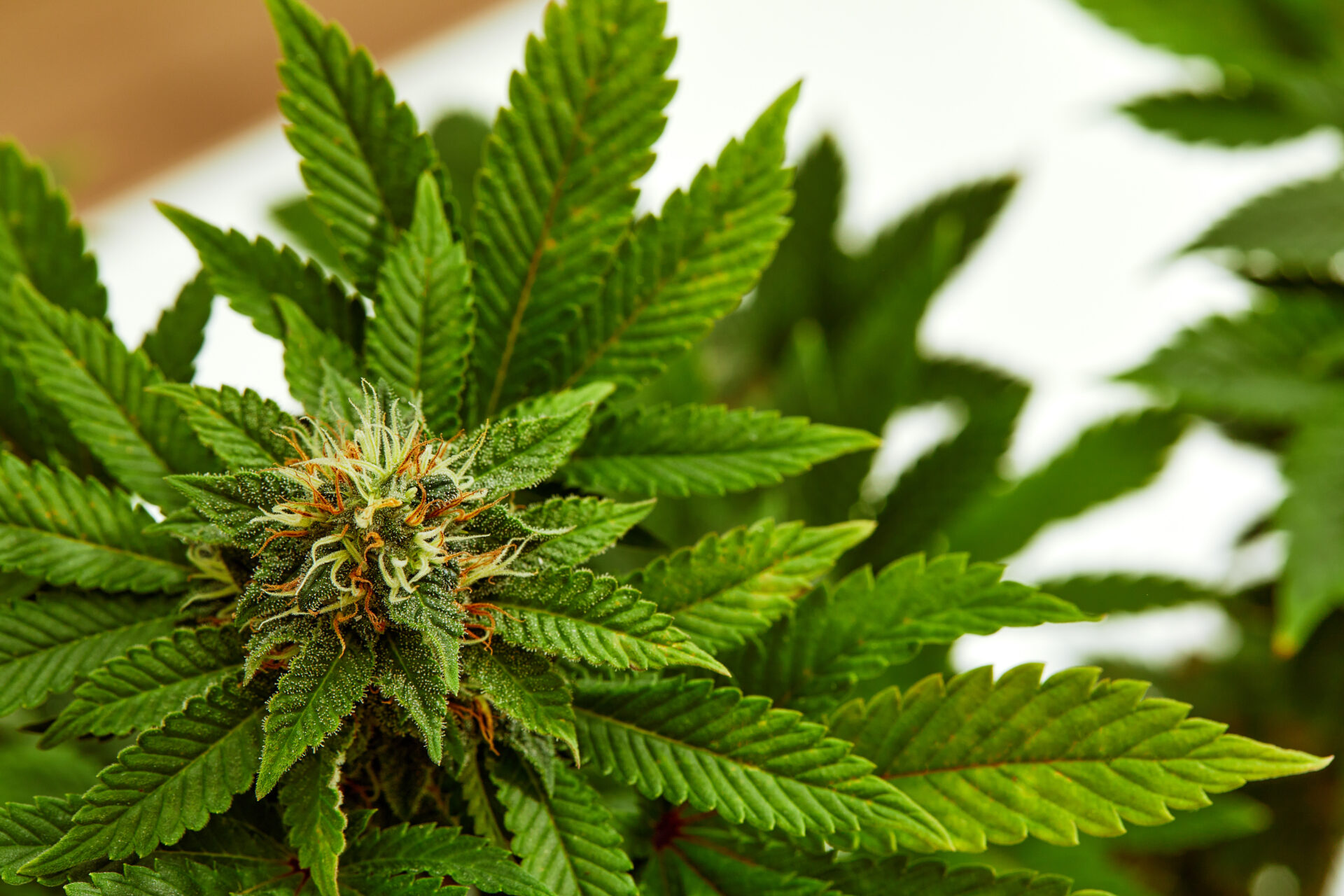
Scientific attention on the pain-relieving impacts of the cannabinoids has been driven primarily by growing acknowledgment of the elements and function of the ECS, a widespread family of G-protein–coupled cannabinoid receptors (CB1 and CB2) and lipid ligands (such as anandamide and2-arachidonyl glycerol2-AG). The ECS has been indicated to play a significant role in the modulation of a broad range of physiological activities, including neurotransmission, pain perception, and inflammation. It is not an exaggeration to claim that all experimentation utilizing animal models of pain in which the cannabinoid system has been targeted has suggested that leveraging this system possesses pain-relieving potential. Yet, the very factors that make the ECS a tempting therapeutic target also create considerable challenges and somewhat undesirable effects: activation of the CB1 receptor has widespread adverse impacts on mood, movement, memory, and other functions that make it difficult to isolate the analgesic reaction from other behavioral effects. The characterization of the ECS and its components has provoked interest in the creation of substances that target the ECS in an attempt to generate analgesia without such nonspecific consequences: substances that block endogenous ligand metabolic enzymes, substances that inhibit ligand transport, substances that bind only peripheral CB1 receptors and that do not cross the blood–brain barrier, and substances that selectively bind the non-neuronal CB2 receptor have all been investigated in recent years. These pharmaceutical strategies have not produced any strong leads to date.
There is an apparent contradiction in pondering the impacts of cannabis on athletic capability. Despite proof that recreational cannabis use may temporarily impair psychomotor abilities and cognitive function, there is a belief among some competitors that cannabis usage may have positive impacts. The literature is sparse, and the illegal or prohibited status of cannabis globally has restricted our ability to gather high-quality information on the patterns and prevalence of cannabis usage among elite competitors. In recent years, some efforts have been made to investigate this occurrence, and this section will summarize some of this published literature.
In interpreting information, it is crucial to acknowledge that studies of the occurrence of cannabis usage among competitors may involve self-reporting or detection of cannabinoids following urine drug testing. Studies in which both methods were utilized have shown that under-reporting of cannabis usage poses a significant risk of bias in self-report studies. Cannabis is banned in sport (according to WADA) during the in-competition time only, which needs to be taken into account in analyzing self-reporting and antidoping analytical data.
Surveys of competitors have implied that cannabis usage is infrequent but may differ by gender and by sport. A recent systematic review by Brisola-Santos highlights some critical insights. Self-reported cannabis usage among NCAA competitors was largely for social or recreational reasons (61%); merely0.6% stated that the use of cannabis was chiefly for performance-enhancing reasons.
There may be geographical correlations as well, as cannabis usage seems to be more common in some nations compared to others; this may be linked to prevailing traditions and beliefs. In several studies, the frequency of cannabis usage is second only to alcohol among competitors (in the general community, tobacco comes second). There is conflicting literature on the frequency of cannabis usage among elite and non-elite competitors, with some studies suggesting a higher prevalence of cannabis usage among elite competitors and others suggesting the opposite; this variation may also connect to existing local traditions and views regarding cannabis. Brisola-Santos et al suggest that “a number of athletic subgroups are at increased risk for marijuana consumption. Surprisingly, a common rationale for use seems to be to enhance athletic performance” with particular associations with sliding sports (skeleton and bobsledding) and ice hockey.
Research among amateur professional (NCAA) sports personnel indicates that the consumption of prohibited substances like marijuana is influenced by social standards and likelihood of exposure. This is crucial, as evolving public perspectives and marijuana regulations globally might contribute significantly to modifying consumption trends of marijuana among sports personnel.
Other actions noted to be related to marijuana consumption encompass excessive alcohol use and females competing on the global stage. It also appears from one investigation that extreme sports participants start trying marijuana at a quite early age.
Marijuana consumption among sports personnel may therefore be more connected to social tendencies of conduct rather than to improve efficiency.
Among the initial investigations examining the possible performance-boosting impacts of marijuana, Steadman and Singh (1975) revealed20 healthy participants to inhale1.4 g of marijuana containing1.3% THC using a glass pipe; subjects took20 to25 inhalations at each session. A control condition employed marijuana with THC “chemically removed.” Subjects subsequently underwent assessments of muscle strength, physical activity capacity, forced vital capacity (FVC), and flow rate of expiration. Marijuana usage elevated heart rate, systolic and diastolic blood pressure, and diminished physical activity capacity. No variation in hand grip strength, FVC, or expiratory flow rate was recorded.
In another early Canadian study, Renaud and Cormier exposed12 young healthy participants to a single cigarette of smoked marijuana containing1.7% THC and evaluated influences on FVC and FEV1, maximal work capacity (MWC). There was no control condition. Marijuana usage lowered MWC compared with baseline, increased heart rate, and raised metabolic rate.
As early as1982, it was determined that marijuana had no performance-enhancing potential and that “the dangers … far exceed the advantage.” Eichner (1993) stated that marijuana was not performance-enhancing but rather performance-hindering. Although specific performance-boosting effects of marijuana may be uncertain, the utilization of marijuana to assist relaxation and alleviate anxiety may be indirectly perceived to enhance performance particularly in activities such as surfing and skiing. Sports personnel have also been demonstrated to possess higher pain thresholds than controls. Marijuana utilization has also recently been acknowledged as aiding athlete’s sleep duration and recuperation, which may favor performance when an athlete is confronting multiple contests in a short timeframe.
It should be mentioned that anxiolytic and sedative medications as well as most pain medications are not banned. A lack of performance-boosting effect has been reiterated in more recent analyses, including the most recent systematic analysis, and this conclusion suggests that the rationale for regarding marijuana as a prohibited substance is linked to safety issues (see below) and the fact that intake of a prohibited substance conflicts with the ethos of sport.
In recent times, there has also been significant demand from elite sportspeople for reassessment of marijuana for its function as a pain relief agent and also for its role in decreasing symptoms associated with traumatic brain injury. This public notion has resurrected the dialogue back to the boardrooms of the governing authorities of professional sports, the International Olympic Committee and the World Anti-Doping Agency, and inquiries regarding the performance-boosting impacts of cannabinoids and their health impacts on athletes (including athletes with disabilities and Paralympians) have returned to the forefront.
The Index of Banned Substances and Techniques (Index) is published annually by WADA, and substances are considered for inclusion if they satisfy2 of the following3 standards: (1) potential to or improves sport productivity; (2) actual or potential danger to health; and (3) contrary to the ethos of sport. Marijuana has been on the WADA Index since2004. Despite the absence of robust evidence on the performance-enhancing effect, it is acknowledged that there are certain health hazards linked to the consumption of marijuana and many still deem that marijuana contradicts the ethos of sport, as defined in the World Anti-Doping Code.
M marijuana is banned in competition only. In acknowledgment that several athletes were being penalized due to the fact that marijuana remained in their system after out of competition recreational use, the threshold level for marijuana metabolite carboxy-THC was elevated in2011 from15 ng/mL to150 ng/mL. In2018, CBD was removed from the Index as it is not a cannabimimetic and does not possess psychoactive properties.
Athletes may request a Therapeutic Use Exemption (TUE) to utilize a banned substance. These may be granted by a TUE Committee (TUEC) if the athlete would face a significant detriment to health if the substance was withheld; the use would not enhance performance beyond a return to normal health; and there is no reasonable nonbanned alternative. These standards are assessed on a case-by-case basis and subject to interpretation by TUECs.
The reported epidemiology of injuries in Paralympic sports participants suggests that many of them could experience pain, either from the injury itself or as a result of the disability (see accompanying article by Grobler et al in this edition). Of the applicable disability types, several of them (including post-amputation pain and central neuropathic pain related to spinal cord injury) may theoretically gain from THC consumption and nabilone, and patients report enhancements in spasticity and therefore might be significant in the management in athletes with brain injury with ensuing spasm and pain. Additionally, glaucoma, a main cause of visual impairment, may also be cannabinoid responsive as cannabinoids such as THC lower intraocular pressure, but clinical evidence is lacking. Although a TUE can be granted to athletes with disabilities who have been prescribed medical marijuana, no dedicated clinical trials have been carried out in this group of athletes.
The potential adverse health impacts of marijuana in elite sports personnel have not been specifically examined, but lessons may be derived from other recreational marijuana literature. In a recent review, marijuana adverse impacts were classified as acute or chronic. Acute effects encompass impacts on memory, coordination, and judgment (and paranoia/psychosis after high doses). Chronic effects are largely associated with early adolescent marijuana use and encompass dependence, poor academic performance, and altered brain development; additional impacts comprise chronic bronchitis (from inhalation) and increase in risk of chronic psychosis disorders in those with a predisposition to such disorders.
Most of the studies evaluated thus far on marijuana effects on performance or safety have concentrated on recreational use rather than specifically authorized medicinal use; little is known of the adverse impacts of marijuana when utilized under medical supervision, however, effects seem modest and well-tolerated.
Marijuana consumption among sports personnel may mirror external societal and cultural norms and experiences within specific subcultures of sport. Marijuana consumption is more widespread among certain athletes involved in high-risk sports, but there is no proof of performance-enhancing or causal impacts. Self-reported consumption of marijuana for pain and concussion management among elite sports personnel is increasingly being documented, and with emerging scientific recognition of the potential physiological function of the endocannabinoid system deserves serious further investigation. Instances of particular research inquiries that require focus include the utilization of cannabinoids to decrease opioid pain medication and the possible function of cannabinoids to prevent or manage symptoms of traumatic brain injury.