

If you’ve ever scanned a QR code on a cannabis product and felt overwhelmed by numbers, you’re not alone. Learning how to read a cannabis COA helps you understand what’s actually inside a product and whether it meets basic quality and safety expectations.
This guide explains how to understand a COA lab report in simple terms, even if you’ve never looked at one before. Looking for Reliable Toronto weed delivery ? Herrble Offers 24/7 Premium Cannabis Across Canada
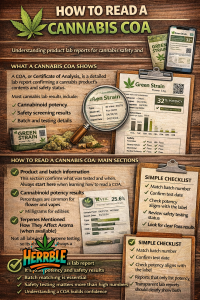
A COA, or Certificate of Analysis, is a lab report created after a product is tested. Understanding a cannabis COA allows you to see verified information instead of relying only on marketing claims.
Most cannabis lab results include:
cannabinoid potency
safety screening results
batch and testing details
Knowing how to read these sections helps you shop with more confidence.
Related articles : The Health Benefits of Cannabis
Before reading cannabis lab results, make sure the report matches your product. Check:
product name
batch or lot number
test date
If these don’t line up, the COA may not apply to what you’re holding.
This section confirms what was tested and when. Always start here when learning how to read a cannabis COA.
Look for:
product type
batch or lot number
sample and report dates
Potency data shows THC, CBD, and sometimes minor cannabinoids. Understanding a COA means knowing that:
percentages are common for flower and vapes
milligrams are common for edibles
Higher numbers don’t automatically mean better quality.
Related articles : What Not to Eat While Using Marijuana
Some COA lab reports include terpene information. This section can help explain aroma and flavor differences between products with similar potency.
Not all labs include terpene testing, so its absence isn’t always a red flag.
This is the most important part of reading a cannabis COA. Safety sections may test for:
pesticides
heavy metals
mold and bacteria
residual solvents (for extracts)
Most reports show Pass/Fail results along with measured values.
When reviewing cannabis lab results, you may see:
ND (Not Detected)
LOQ (Limit of Quantitation)
These indicate whether a substance was found and at what level.
While learning how to read a cannabis COA, watch out for:
missing batch numbers
outdated test dates
no safety testing shown
reports that only list potency
Transparent lab reports should clearly show both potency and safety results.
Use this quick checklist when reviewing cannabis lab results:
Match batch number
Confirm test date
Check potency aligns with the label
Review safety testing status
Look for clear Pass results
This makes understanding a COA fast and practical.
Once you understand how to read a cannabis COA, shopping becomes less about guessing and more about informed choice. COA lab reports help confirm potency, safety, and consistency across products.
You don’t need to be a scientist — just knowing what to look for can make a big difference.
A COA is a cannabis lab report
It shows potency and safety results
Batch matching is essential
Safety testing matters more than high numbers
Understanding a COA builds confidence