

After harvesting hemp plants at collection, an appropriate drying and curing are essential for flowers. These methods help maintain and enhance tastes by preserving terpenes and cannabinoids, while reducing chlorophyll and eliminating the plant’s green flavor.
The drying phase is the primary evaporation of flowers, which typically occurs in the open environment—recently harvested plants can shed up to 75% of their mass to moisture evaporation, as well as branches, stems, twigs, and foliage that are trimmed away.
In dry trimming, drying occurs first and then flowers are pruned; in wet trimming, the opposite.
A drying shouldn’t be too hasty or too lengthy: Too hasty and the exterior of flowers will seem dry but the interiors won’t be; too lengthy and flowers may develop mildew.
When flowers are pruned and desiccated, they are stored in sealed containers for curing. This halts the loss of moisture, conserving tastes and fragrances and permitting flowers to achieve their complete flavor.
Join the cannabis revolution with our seamless and discreet weed delivery experience
Drying takes approximately 2-7 days. The procedure is generally shorter when wet trimming because most of the plant material is trimmed away initially and there is less plant to dry.
When dry trimming cannabis, you can hang harvested plants upside down on a wire or hook, either entire plants or branches—this prevents flowers from getting squished or deformed as they dry.
When wet trimming, you’ll place trimmed flowers on a drying grid.
Whether wet or dry trimming, check drying flowers or branches after two days by bending a twig or stalk—if the stalk snaps, that indicates flowers are fully dry. If they don’t snap, leave them and check the following day.
The ultimate guide for drying and curing cannabis for optimal outcomes. A suitable drying area must be dark with temperatures between 60-70°F and humidity ranging from 55-65%. An inexpensive hygrometer will assist you in monitoring these figures.
Depending on your home or property, you may be restricted in what you can use for a drying area. Be aware that it can be challenging to regulate temperature and humidity in larger rooms. Additionally, be informed that the area will emit a cannabis odor. Ensure that the location you select doesn’t have significant fluctuations in temperature and humidity.
Include a small fan to circulate air, and you might need to incorporate a dehumidifier or air conditioning unit as well. If it’s taking too long to dry flowers in your location, you may need to modify the temperature or humidity to assist the drying phase.
UV rays from sunlight can deteriorate cannabis, so for optimal drying, keep your environment dark. If you don’t have a light-tight area, cover your flowers.
It’s acceptable to open the door and check on the flowers, but extended light exposure can hasten the drying process.
Suspending flowers for drying is less labor-intensive but occupies more space. It requires cutting off large branches, or even hanging entire plants upside down. This saves time because you don’t have to “buck,” or detach individual blooms from branches, but as there is more plant material hanging, drying this way will occupy significantly more space.
Another downside to hanging flowers is that they may take longer to dry as there is more plant matter, i.e., branches, stems, stalks, and fan leaves.
When trimming wet, you’ll require a flat rack—you’ll have numerous trimmed individual flowers, so you can’t hang them. Flat racks are round with layers of mesh, and are excellent for airflow.
Examine wet-trimmed flowers drying on the flat rack after 2-3 days by giving them a little squeeze. If they’re still too damp, leave them and check again the following day.
When flowers are finished drying and have been pruned, the initial moisture amount is out and it’s time to cure your cannabis.
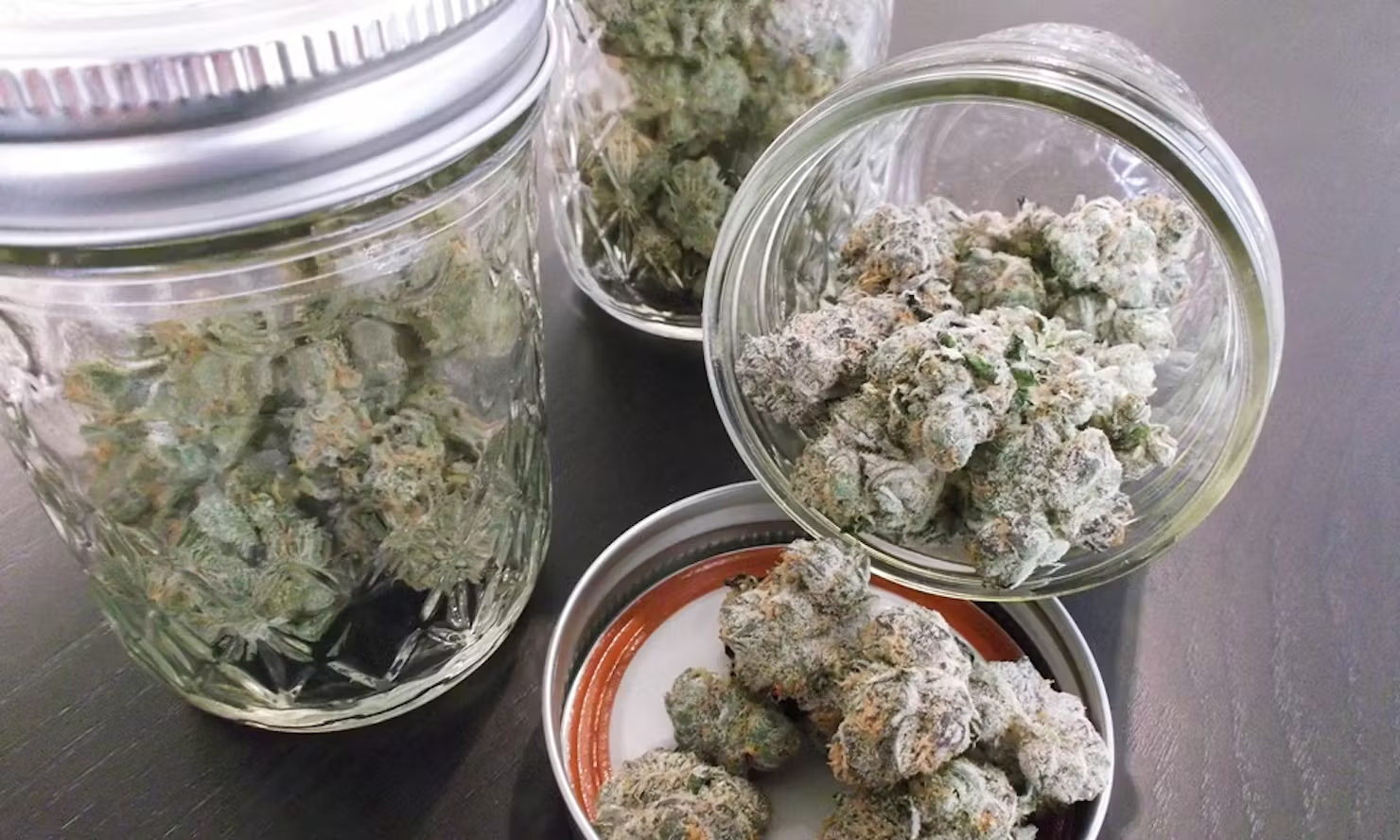
For curing, you’ll be storing completed flowers in containers—usually airtight glass jars—to halt the moisture loss, and to maintain tastes and fragrances. Curing generally requires two weeks to a month, and humidity inside curing containers needs to be between 55-65%.
The curing phase is possibly the most underestimated element of cultivating cannabis. During curing, moisture continues to draw from the core of the flower towards the exterior.
Curing influences the taste and quality of the smoke. Many terpenes, which provide cannabis its distinct scent and flavor, are quite sensitive and can deteriorate and evaporate at temperatures as minimal as 50°F. A gradual cure at lower temperatures will preserve terpenes better than a rapid, hot drying phase.
An appropriate cure also allows you to store cannabis for extended periods without concerns about mildew, or cannabinoid or terpene deterioration. Well-cured flower can be stored in an airtight container in a cool, dark location for up to two years without noteworthy loss of potency.
Curing aids in finishing flowers, enhancing their taste and aroma. During curing, chlorophyll continues to decompose, eliminating a green flavor—without curing, cannabis would taste like a freshly mown lawn. This reduction of chlorophyll makes flowers less harsh and smoother to smoke.
When curing cannabis, it should be carried out in a room or area that has a consistent temperature and humidity—damp, wet basements or hot, humid attics aren’t suitable. The space should maintain room temperature and should not be overly humid.
Light can also deteriorate terpenes, so it’s best to be able to switch off the lights in the area or be capable of covering jars so light doesn’t penetrate.
To cure flowers, you will require:
Once flowers are desiccated, it’s time to cure them.
Position the pruned blooms into some form of airtight receptacle. Most individuals utilize wide-mouth quart or half-gallon glass mason jars, but you can additionally use ceramic, metal, or wooden containers.
Plastic bags are not suitable for curing as they are not impermeable to oxygen. Furthermore, you don’t want your cannabis to have a plastic flavor.
Pack flowers loosely in containers without compacting or crushing them. Seal the containers and store in a cool, arid, dark area.
Within a day or two you’ll observe flowers becoming a bit softer as moisture from the core of the flowers rehydrates the outer parts. If this doesn’t happen, you have likely over-dried your cannabis.
Humidity inside sealed containers should be55-65%. If you’re uncertain, you can also purchase a digital hygrometer—which measures moisture—available for around $20 at any hardware outlet.
If flowers are too dry, you can add a humidity pack, such as a Boveda pack, to rehydrate blooms.
If flowers are too moist, leave the lid off for half a day or a full day before resealing them. Be sure to check humidity levels daily and leave the lid off for a duration if they still are overly moist.
Burp your flowers
During the initial week of curing, regardless of humidity level, open the containers once or twice daily for a few minutes—this is referred to as burping. This releases moisture and replenishes oxygen inside the container.
If you notice a scent of ammonia when opening a container, it indicates that the flowers are not dry enough and anaerobic bacteria are consuming them, which will lead to moldy, rotten cannabis. Leave the lid off for a day and reseal tomorrow.
After the first week, burp containers only once every few days.
After two to four weeks in containers, your cannabis should be cured sufficiently to provide you with a flavorful, aromatic, and quality experience. Some individuals prefer to cure for four to eight weeks, and some strains even benefit from six months or more of curing.