

It may not be as widely recognized as its counterparts cannabinoids CBD and THC, but preliminary investigations imply CBG has noteworthy capability in various health issues; from alleviating tension to assisting in combating antimicrobial resistance. Here’s all you ought to understand. Your favorite cannabis products are just a click away with our fast weed delivery service!
CBG is one of around 144 cannabinoids present in the cannabis flora. Although it is not as widely recognized as principal cannabinoids CBD and THC, it possesses its unique medicinal properties and has exhibited promise in initial research.
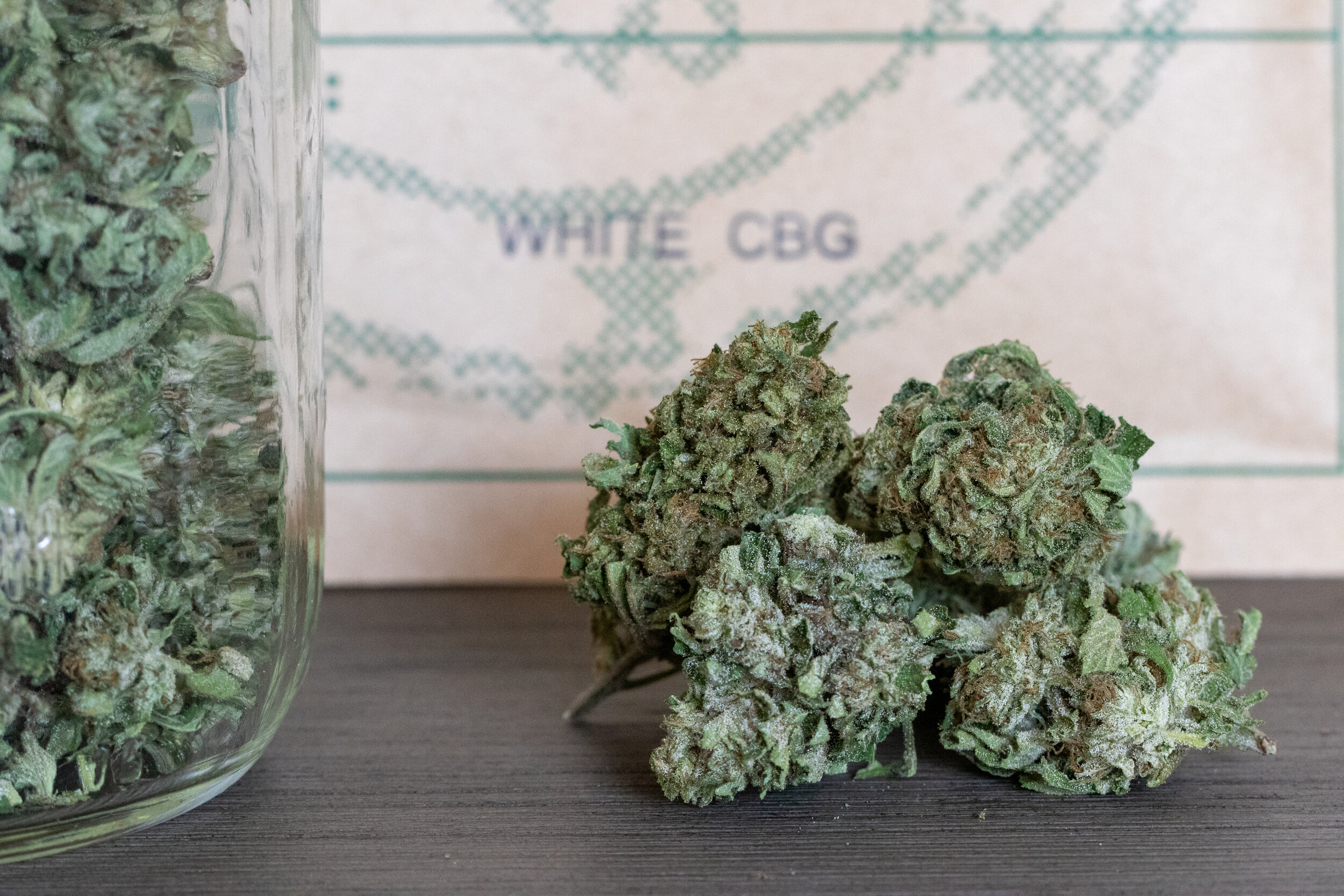
CBG is an acronym for cannabigerol, a non-intoxicating cannabinoid usually discovered in low-THC and high-CBD cannabis varieties.
CBG is occasionally called ‘the mother of all cannabinoids’ because it is a precursor molecule that transforms into other cannabinoids like CBD and THC during the plant’s maturation.
It is generally found in considerably smaller quantities in the flora, often less than1%, while THC and CBD, two of the most prevalent compounds found in the plant, can exceed levels of 20% and beyond.
Like CBD, CBG is non-intoxicating, indicating that while it does engage with the endocannabinoid system, it won’t provide you the ‘high’ frequently connected with cannabis and particularly, THC.
While both CBG and CBD present some similarities, they diverge in their chemical composition, prevalence in the flora, interaction with receptors, and potential uses.
CBG is thought to interact with both CB1 and CB2 receptors in the endocannabinoid network, potentially providing a broader range of possible effects. It has revealed a specific affinity for the CB1 receptors, implying it may impact mood, pain perception, and other functions.
CBG may also affect the creation or degradation of endogenous cannabinoids, such as anandamide and 2-arachidonoylglycerol (2-AG), which play vital roles in various physiological processes.
Potential advantages of CBG
While exploration is ongoing, CBG has exhibited promise in studies for potential advantages including:
CBG is also believed to possess anxiolytic attributes, which means it could assist in mitigating some of the undesirable side effects of THC, such as anxiety and paranoia.
Though the clinical investigations in this domain are restricted so far, there have been several encouraging studies backing the potential medical effects and clinical implementation of CBG.
In a recent double-blind, placebo-controlled clinical investigation — the first to analyze the effects of CBG in humans — the cannabinoid exhibited effectiveness in alleviating anxiety and stress, as well as improving verbal memory when compared to a placebo.
Investigations have also indicated that CBG can diminish intraocular eye pressure caused by glaucoma, and it may be advantageous in addressing conditions such as inflammatory bowel disease. For instance, in one study, CBG heightened the rate of tissue recovery in the colon and decreased inflammation. The authors also discovered that CBG was effective as a remedy to avert colitis-associated damage.
Meanwhile, a study from2020 proposed that CBG may assist in the struggle against antibiotic resistance. Researchers recognized CBG as an antibacterial entity that may serve as a foundation for new drug development. Their examination found that it was not only antibacterial but also effective in mice combating a resilient strain of bacteria known as methicillin-resistant Staphylococcus aureus (MRSA).