

Cannabis is an annual dioecious (unisexual) flowering flora. To elaborate, it sprouts from a seed, attains reproductive maturity, propagates, and perishes all within a single year when growing in nature. Its blossoms are unisexual, so male and female specimens are distinct plants, although hermaphrodites have been frequently recorded.
Contemporary cultivation methods can be utilized to prolong a flora’s inherent life cycle, sometimes almost indefinitely through cloning, permitting desirable phenotypes to exist perpetually without depending on the random chance associated with genetic variations arising from natural sexual reproduction. The duration for a branch to establish roots lies between 5 and 20 days, after which the branch can be regarded as an autonomous flora capable of full growth, sharing the same genetics as its progenitor.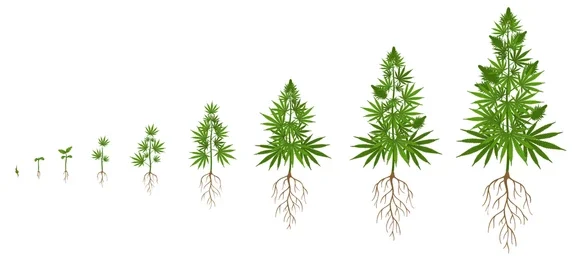
The entire cannabis growth cycle is detailed below; clones commence as little more than a branch, until beneficial roots establish, at which point the flora closely resembles a seedling, eventually progressing into a full vegetative phase.
Germination:
Germinating cannabis seeds necessitates stratification (absorbing ample water) combined with darkness to initiate essential metabolic activities that commence sprouting a seedling. Depending on the seed’s age, initial germination may last from a day to eight; the taproot firmly secures itself in the soil and two cotyledons emerge within 2-4 days. There is no therapeutic value during the germination phase.
Total Time: 3-12 Days
Seedling:
A cannabis flora is classified as a seedling once its cotyledons are revealed and actively beginning transpiration and photosynthesis. For clarity, cotyledons are the two small circular leaves that first emerge from a seed; they distinctly differ from the unique jagged angular leaves that appear shortly afterward. During this phase, a flora exhibits notable phototropism, growing and stretching toward whatever light source provides the suitable wavelengths. Fluorescent lights are chiefly employed because the plant does not require high-grade low wavelength red light present in high pressure sodium lights and does not need the volume of light or heat produced by metal halide bulbs. An exceptionally skilled grower may be able to “sex” the flora at this stage; however, typically a plant is not “sexed” to determine if it is male or female until the second week of the Bloom cycle. Once a male flora is identified, it is generally eliminated by the cultivator. There is no therapeutic value during the germination phase.
Total Time: 1-4 Weeks
Vegetative:
The vegetative phase of cannabis development shows the most significant increase in biomass and overall growth. Root development expands considerably to cope with the marked surge in nutrient demand, large leaves begin to flourish to generate sufficient surface area for photosynthesis, and transpiration is significantly accelerated, necessitating increased water absorption. This period mimics natural summer growth, with the absence of low wavelength red light, and metal halide bulbs being utilized mainly for their strong short wavelength blue light. The photoperiod during this stage consistently allows for more light per day than darkness, a vital element in preventing premature flowering. Cannabis is a short-day quantitative plant, and flowering depends on the quality of the light it receives, as well as the extent of its deprivation rather than sheer quantity. Some cultivators prolong the vegetative state for an extended period, including those plants designated as mothers (plants used continuously for cloning). While cannabinoids begin to slowly form in this stage, there is no notable therapeutic effect or efficacy for vegetative plants. Consequently, some states’ medical marijuana regulations treat vegetative plants differently from flowering plants.
Total Time: 1-2 Months
Transitional (Pre-Flowering):
During this brief phase, nutrient consumption surges dramatically as growth can occasionally double in an extremely short duration. This transition involves the plant utilizing as many nutrients as possible, growing as extensively as feasible before hormonal shifts indicate reproduction. This stage in plant growth can be artificially induced by restricting light exposure to 12 hours a day with 12 hours of darkness following. Cannabis possesses the same photoreceptors found in many plants that inhibit flowering in response to light exposure. Only by limiting light and increasing darkness can a cannabis plant be encouraged to flower. This phase prepares the flora for the flowering stage and the subsequent formation of various cannabinoids.
Total Time: 1-2 Weeks
Flowering:
The reproductive phase of cannabis development entails significant hormonal changes catalyzed by an elevation in red and far-red wavelengths of light (primarily provided in controlled environments by high pressure sodium bulbs) and the alteration in photoperiod elucidated earlier in the transitional phase. This period signifies the first considerable increase in THC, CBD, and the array of other cannabinoids present in high concentrations in female cannabis specimens. Before the flowering stage, trace amounts exist in plant tissues, but in quantities insufficient to induce intoxication. Only after flowering is initiated and the plant starts to expend more of its energy towards calyx development to enhance surface area for the resultant trichomes does the plant begin to generate cannabinoids in abundance. The flowering duration varies widely among strains. When the flora is harvested during the flowering cycle determines the composition and concentration of each cannabinoid. Certain strains are harvested earlier or later to maximize the effectiveness of different cannabinoids. The flower or bud stage is where the flora begins to develop notable therapeutic advantages.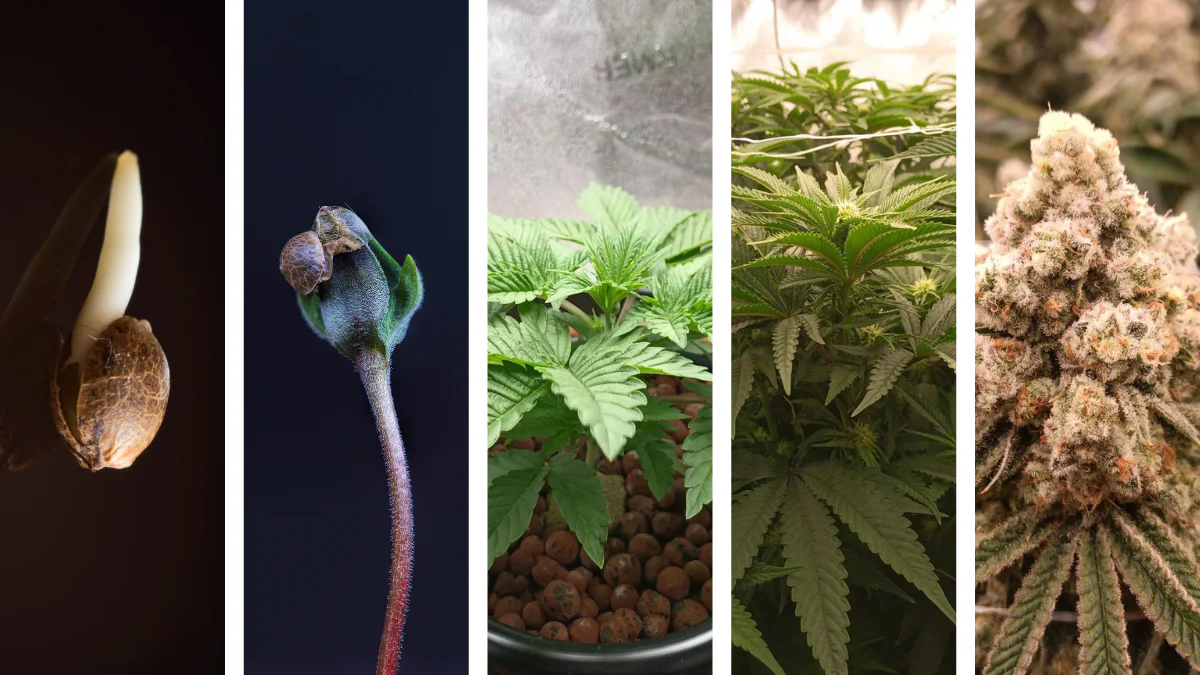
Total Time: 1-4 Months
Harvesting & Curing:
Following flowering and a ‘flush’ or reduction in nutrients and water if it is occurring, the cannabis is poised for harvesting. Harvesting cannabis entails trimming and drying the product with some duration taken afterward to cure it into a finished remedy. Trimming is time and labor-intensive; the desirable part of the cannabis flora is the flower or bud, specifically the calyxes containing the highest cannabinoid concentrations. Leaves contain significantly lower amounts of cannabinoids and a larger quantity of hazardous combustion-related byproducts when smoked. Trimming and drying involve removing the large fan leaves and cutting the smaller ones with scissors, suspending the product upside down for several days, and trimming the remaining leaves afterward. Curing consists of placing the product in glass jars for several days at a time, permitting intervals of fresh air exposure and rotation of the product. Curing facilitates the breakdown of chlorophyll and sugar, eliminates remaining moisture, and enhances the flavor and consistency of the finished remedy. Some cultivation experts believe that curing duration can extend to months rather than weeks. While the trim or plant material removed possesses some value, it is considerably less than the flower or bud. For this reason, plant material must be evaluated differently than the flower or bud material.
Total Time: 1-2 Weeks
